Your Guide To A Breathtaking Body Pain Relief Experience
Breathing is something we do every moment of our lives, yet we rarely think about how much it can influence our physical state.

When we experience stress, our breathing can change. When our breathing changes, the muscles involved in breathing may also respond differently. Over time, these changes may contribute to physical tension, altered posture, and discomfort.This is one reason breathing can be relevant when looking at chronic and recurring body pain.Within The OmniEase Method, breathing is one of the components toward achieving greater physical ease and reducing reliance on ongoing pain-relief interventions.
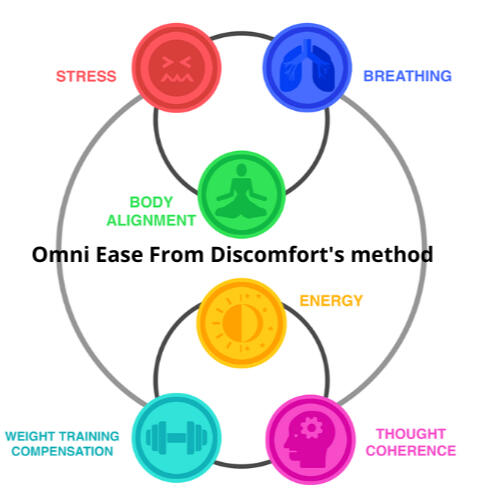
If you are new to the Omni Ease From Discomfort framework, we recommend starting with the overview article first.
Rather than viewing breathing as simply a way to bring oxygen into the body, it can be useful to understand how breathing interacts with stress response, muscular tension, and physical alignment.
How Can Breathing Be Connected To Body Pain?
There are two broad ways in which breathing may be relevant to recurring body discomfort.1. Breathing and stressStress can influence the way we breathe.When someone experiences stress, their breathing may become faster, shallower, more effortful, or otherwise different from their usual breathing pattern.If stressful situations occur repeatedly, these changes may become increasingly familiar to the body.This can contribute to a cycle in which:
Stress → changes in breathing → physical tension → discomfort → additional stressThis does not mean that every change in breathing causes pain.Rather, breathing is one of several physical processes through which the effects of stress can manifest.Improving awareness of breathing can therefore be one way of gaining another perspective on the relationship between stress and physical discomfort.
2. Breathing and physical alignmentBreathing can also influence the way different muscles contribute to movement and posture.The diaphragm is the primary muscle involved in breathing. It works together with other muscles and structures to create the changes in pressure necessary for inhalation and exhalation.Other muscles can assist with breathing when necessary. These include muscles around the ribs and chest, as well as muscles such as the latissimus dorsi.When these secondary breathing muscles are repeatedly required to contribute more than usual, increased muscular activity or tension may occur.Because some of these muscles are also involved in positioning and moving the upper body, changes in their activity can potentially influence posture and physical alignment.This is one possible pathway through which breathing may become relevant to body discomfort:
Breathing mechanics → muscular involvement → physical alignment → load distribution → discomfortAgain, this is not a claim that poor breathing is the cause of every posture problem or every instance of pain.Body pain is complex and can arise from many different factors.The purpose of understanding this relationship is simply to recognize that breathing is another component worth considering.
Three Breathing Factors Worth Understanding
When exploring the relationship between breathing, stress, tension, and discomfort, three broad areas are particularly relevant:
1. Diaphragm function
2. Breath quality
3. Breath rateThese factors are interconnected, but each provides a different perspective on how breathing functions.
1. Diaphragm Function
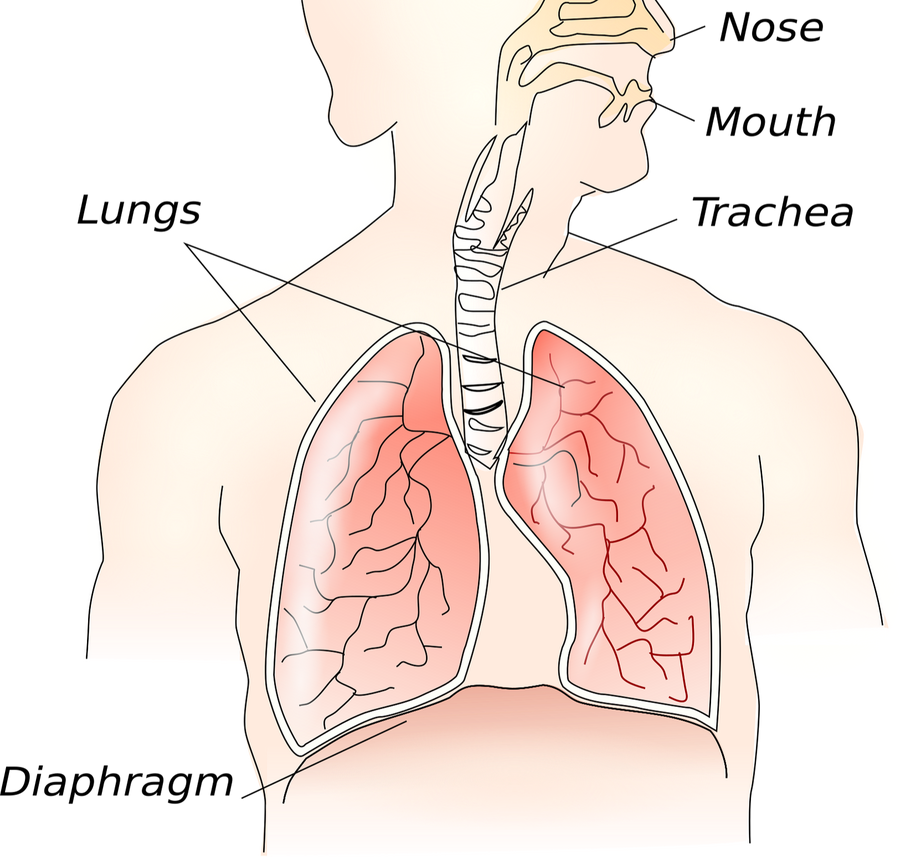
The diaphragm is the primary muscle involved in breathing. Its function naturally changes according to what the body is doing and what demands are being placed upon it.When considering diaphragm function, several factors may be relevant. These include how we breathe, how relaxed the diaphragm remains during breathing, and how effectively the diaphragm can be activated when greater respiratory effort is required.For example, breathing through the nose is one factor that may influence the way breathing takes place. The diaphragm may also need to remain sufficiently relaxed during ordinary breathing, rather than being unnecessarily tense throughout the breathing cycle.At other times, the diaphragm may need to be firmly and intentionally activated, such as when the body requires greater respiratory effort.These different aspects of diaphragm function can therefore be viewed as complementary rather than contradictory.The goal is not necessarily to keep the diaphragm completely relaxed, nor is it to keep it constantly activated. Rather, healthy breathing requires the diaphragm to be capable of relaxing and activating appropriately according to the demands placed upon the body.When diaphragm function is not working optimally, other muscles may potentially need to contribute more to breathing. This may increase the workload placed upon secondary breathing muscles and contribute to changes in muscular tension around the chest, back, neck, or shoulders.Understanding these different aspects of diaphragm function can therefore provide another perspective when considering the relationship between breathing, muscular tension, posture, stress, and body pain.Nasal breathing, appropriate relaxation of the diaphragm, and appropriate diaphragmatic activation are areas that may be relevant when considering diaphragm function during breathing.
2. Breath Quality

Another factor to consider is breath quality. Breathing is not simply a matter of how much air is moved in and out of the lungs. The characteristics of each breath can also vary.These may include the size, depth, and completeness of each breath, as well as how naturally and efficiently the breath moves through the breathing cycle.One important distinction is that a deeper breath does not necessarily mean a bigger breath.Trying to take increasingly large breaths can sometimes cause excessive chest movement or unnecessary muscular effort. For some people, this may even create additional tension rather than promoting a more comfortable breathing pattern.The way the body expands during breathing also matters. Efficient breathing involves coordinated movement involving the diaphragm and surrounding structures, rather than simply trying to raise or expand the chest as much as possible.For example, some circumstances may call for smaller breaths, while other circumstances may require deeper or more complete breaths.The appropriate characteristics of breathing can therefore vary according to factors such as physical activity, emotional state, and the body's current demands.Breath quality may also be influenced by how effectively different aspects of the breathing process work together. Changes in breathing habits can affect how much effort is required to breathe and how different muscles contribute to the process.This is particularly relevant when chronic stress is involved. Stress may influence breathing in ways that alter its depth, completeness, or overall quality. When such changes occur repeatedly, they may become part of the body's familiar response to stress.Understanding breath quality therefore involves more than simply trying to breathe "more" or "deeper". Smaller, deeper, or more complete breaths may each have their place depending on the circumstances, and the broader goal is to support breathing that is appropriate to the body's needs.These considerations can provide another perspective when examining the relationship between breathing, stress response, muscular tension, posture, and body pain.
3. Breath Rate
The third factor to consider is breath rate.Our breathing rate naturally changes according to the demands placed upon the body. Physical activity, emotional states, stress, rest, and other circumstances can all influence how frequently we breathe.During periods of stress, for example, breathing may become faster or more irregular. If this response occurs repeatedly, changes in breathing rate may become increasingly familiar to the body and potentially contribute to a broader pattern of physical tension and stress.When considering breath rate, several aspects may be relevant. These may include becoming comfortable with breath holds, slowing down your breathing and adapting to controlled breathing rhythms.Breath holds represent one aspect of breath-rate regulation. Becoming more comfortable with periods of controlled breath holding may be relevant to certain breathing practices. However, this does not mean that longer breath holds are necessarily better or that they should be forced.Another aspect is slowing down your breathing. While a slower breathing rate may be relevant in some circumstances, deliberately forcing breathing to become slower than what feels comfortable may instead create unnecessary strain.Breath rate may also involve adapting to controlled breathing rhythms. Rather than treating one particular breathing rate as universally appropriate, different rhythms may be relevant under different circumstances and according to the demands placed upon the body.These considerations are not necessarily separate from one another. Becoming comfortable with breath holds, slowing down breathing, and adapting to controlled breathing rhythms can all be viewed as different aspects of how the body responds to changes in breath rate.As with breath quality, more is not necessarily better. A breathing rate that is appropriate in one situation may be inappropriate in another, and breathing that is deliberately slowed or held for too long may create unnecessary strain.The broader consideration is whether breathing can respond appropriately to changing demands while remaining sufficiently comfortable and coordinated.This is particularly relevant when considering chronic stress. A body that repeatedly responds to stress with an elevated or disrupted breathing rate may also experience changes in muscular activity and overall physical tension. Conversely, becoming more familiar with different breathing rates and controlled breathing rhythms may provide another perspective on how breathing interacts with the body's stress response.
Why These Three Factors Should Be Viewed Together
Diaphragm function, breath quality, and breath rate are not isolated processes.They can influence one another.For example, a stressful situation may cause breathing to become faster. Changes in breathing may alter the way the diaphragm and secondary breathing muscles participate. Increased muscular activity may then contribute to physical tension.Similarly, changes in physical activity can alter breathing requirements, which can naturally change breathing rate and the degree of muscular involvement.This means that trying to isolate a single "bad" breathing habit may sometimes oversimplify the situation.Instead, breathing can be understood as part of a larger system involving:
Stress → breathing → muscular activity → posture and alignment → physical discomfortWhile physical discomfort can itself feed back into the system:
Discomfort → stress → altered breathing → increased tension → further discomfortThis is one reason breathing can be worth considering alongside the other components of The OmniEase Method.
Understanding Your Breathing
Understanding the different factors involved in breathing can make it easier to appreciate why breathing may change alongside stress, tension, posture, and body pain.Diaphragm function, breath quality, and breath rate do not operate independently. Changes in one aspect of breathing may influence the others, while stress and other circumstances may influence breathing in return.This does not mean that every breathing-related issue is necessarily responsible for body pain. Rather, becoming more familiar with how breathing works can provide another perspective when considering factors that may be contributing to tension, discomfort, or difficulties with recovery.The breathing factors discussed in this article may therefore serve as useful areas to learn more about when exploring the relationship between breathing, stress response, posture, muscular tension, and body pain.
From Breathing Awareness To A Breathtaking Experience
The word "breathtaking" usually describes something extraordinary.
But there is another interesting way to look at the phrase.Something as ordinary as breathing may influence multiple aspects of how we experience our bodies.It can change with stress.It can change with physical activity.It can influence muscular involvement.It can interact with posture and alignment.And it can potentially influence how physical discomfort is experienced.This does not mean that changing your breathing will automatically eliminate body pain.Instead, it means that breathing may be one more piece of the puzzle worth understanding.By learning more about diaphragm function, breath quality, and breath rate, you can begin to see breathing not merely as an automatic process, but as one of the many factors that may interact with your physical and emotional state.Sometimes, gaining a better understanding of these connections can be the first step toward making more informed choices about your own well-being.
Looking For Additional Support?
While understanding breathing and its relationship with stress and physical tension can be an important step toward achieving greater physical ease and reducing reliance on ongoing pain-relief interventions, some individuals may also benefit from complementary tools that support comfort and recovery.Explore our Pain Relief Tips Silver Membership Portal to learn more.Access to the Membership Portal is currently free for the first month, giving you the opportunity to start applying practical tips to better manage your pain and move towards sustained pain relief.